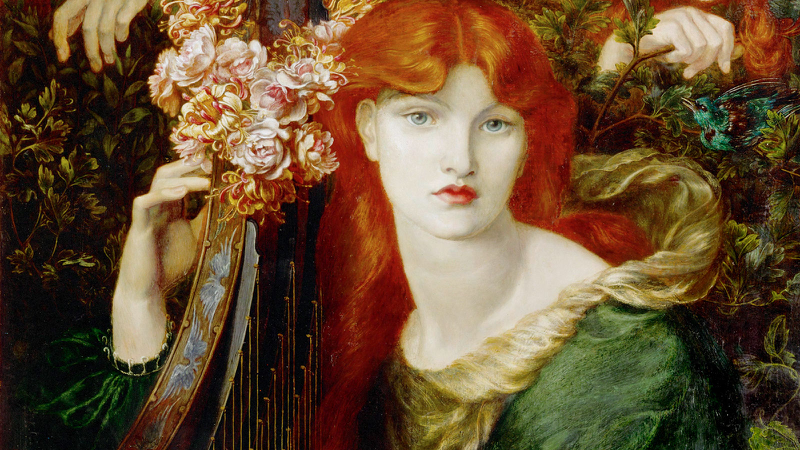
Three pre-raphaelite painters:
ROSSETTI, MILLAIS, HOLMAN HUNT

materials for the CLIL activity of the 3D class

The Pre-Raphaelites
Dinah Roe introduces the unique band of artists, poets and designers known as the Pre-Raphaelites, charting their formation and evolution from the 1850s to the late 19th century.

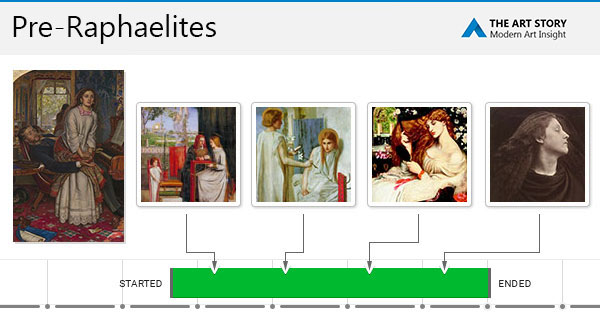
Pre-Raphaelitism began in 1848 when a group of seven young artists banded together against what they felt was an artificial and mannered approach to painting taught at London’s Royal Academy of Arts. They called themselves the ‘Pre-Raphaelite Brotherhood’ (PRB), a name that alluded to their preference for late medieval and early Renaissance art that came ‘before Raphael’. The painters were: Dante Gabriel Rossetti, William Holman Hunt, John Everett Millais, James Collinson and Frederic George Stephens. The non-painters were sculptor Thomas Woolner and Brotherhood secretary William Michael Rossetti, Dante Gabriel Rossetti’s brother. Inspired by the work of old masters such as Van Eyck, Memling, Mantegna, Giotto and Fra Angelico, and following a programme of ‘truth to nature’, the artists advocated a return to the simplicity and sincerity of subject and style found in an earlier age. Their aims were vague and contradictory, even paradoxical, which was only to be expected from a youthful movement made up of strong-minded individuals who sought to modernise art by reviving the practices of the Middle Ages.
Original link
The Pre-Raphaelite Movement, Artists and Major Works
The Pre-Raphaelite artists renewed the arts of their day by focusing on spiritualism, artistic freedom, and connection to nature.

Pre-Raphaelites: Key Ideas
  • The Pre-Raphaelites rejected not only the British Royal Academy's preference for Victorian subjects and styles, but also its teaching methods. They believed that rote learning had replaced truth and experience. Theirs was one of the first major challenges to "official" art, and their institutional critique is a crucial piece of the history of modern art in Britain.
  • Above all, Pre-Raphaelitism espoused naturalism: the detailed study of nature by the artist and fidelity to its appearance, even when this risked showing ugliness. It also named a preference for natural forms as the basis for patterns and decoration that offered an antidote to the industrial designs of the machine age.
  • As part of their reaction to the negative impact of industrialization, Pre-Raphaelites turned to the medieval period as a stylistic model and as an ideal for the synthesis of art and life in the applied arts. Their revival of medieval styles, stories, and methods of production greatly influenced the development of the Arts and Crafts and Art Nouveau design movements.

Original link
Musée d'Orsay: Pre-Raphaelism
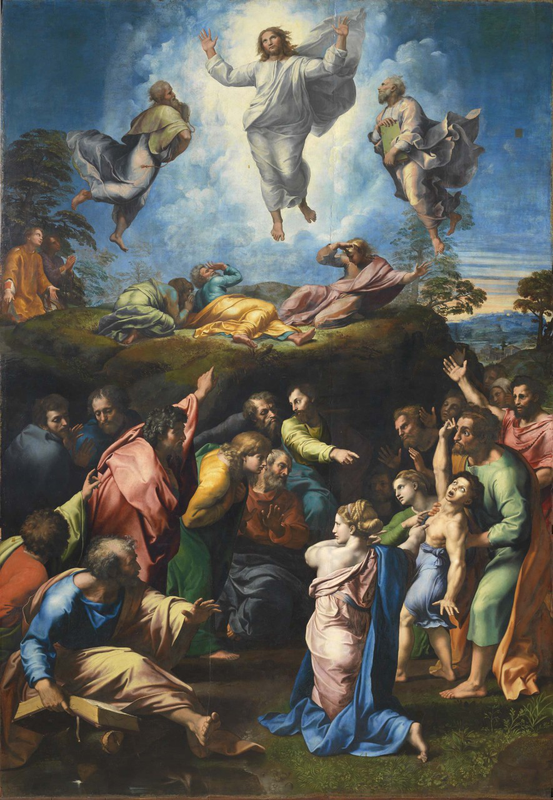
They founded the Pre-Raphaelite Brotherhood in 1848. They chose the name as a reminder that the group would concentrate its criticism on a painting by Raphael (1483-1520),The Transfiguration (1518-1520, Vatican Museums). Hunt said it "should be condemned for its grandiose disregard of the simplicity of truth, the pompous posturing of the apostles and the unspiritual posture of the Saviour."
They wanted to return to art as it had been before Raphael, free from all academic affectation.It was medieval art, and in particular the art of the Italian primitive painters, that they regarded as the model of purity and freedom.

Technically speaking, these paintings were similar in their brilliant colours, a heightened realism that reproduced nature in exact detail, and great freedom in the attitudes of the characters. This was all accompanied by learned religious, literary and poetic references. All three paintings exhibited at the Royal Academy were purchased and the critics were quite positive.
Original link
Raffaello Santi
Trasfigurazione
1518 - 20
Roma, Pinacoteca Vaticana
 
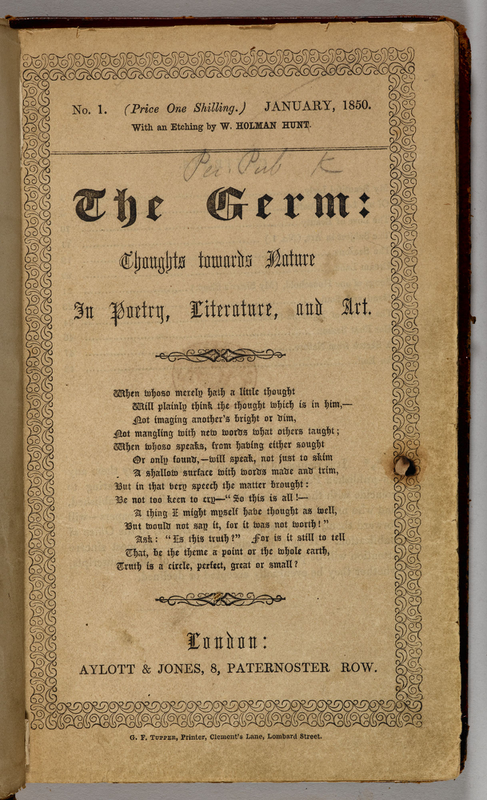
Pre-Raphaelite journal, The Germ
Discover 'Pre-Raphaelite journal, The Germ', a journal, on the British Library's Discovering Literature website.
Original link